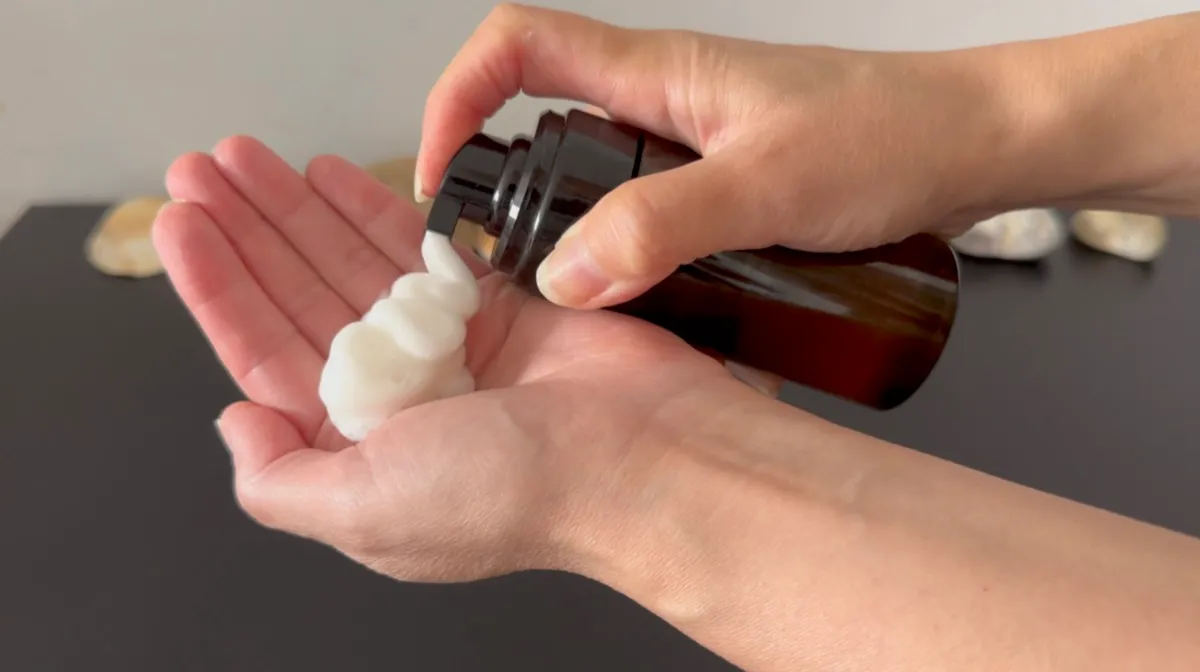
In this post we'll walk through a simple foaming exfoliating cleanser, explain how this type of product works, describe the function of each ingredient, and look at alternatives you can use depending on availability or personal preference. We'll also cover who this cleanser is suitable for, how often to use it, and what results to expect.
This formula is designed to be water-based, gentle, lightly exfoliating, and suitable for regular use — while still being effective enough to improve skin texture over time.
Come join the forum, ask questions, learn from others, and share your own knowledge with the community.
You can support this website through the Buy Me a Coffee platform. Your donation helps me continue creating free formulas, detailed written posts, tutorials, and educational content for anyone who wants to learn how to make their own cosmetic products.
Running the website takes time and effort, from researching ingredients and testing formulas to writing posts, filming videos, editing content, and maintaining the site. Even a small donation helps support this work and allows me to keep sharing useful content for free.
If you find the website helpful and want to support future formulas and tutorials, you can donate through Buy Me a Coffee. Your support is truly appreciated.
The Formula
Phase A
| Ingredient | % |
|---|---|
| Distilled water | 77.1 |
| Glycerin | 3 |
| Propanediol | 4 |
| Disodium EDTA | 0.1 |
Phase B
| Ingredient | % |
|---|---|
| Sodium Olivamphoacetate | 10 |
| Succinic Acid | 1.5 |
| Lactic Acid 80% solution | 1.5 |
| Green Tea Extract | 2 |
Phase C
| Ingredient | % |
|---|---|
| Preservative (Benzyl Alcohol, Dehydroacetic Acid) | 0.8 |
Foaming Cleansers: How Do They Work?
Foaming cleansers rely on surfactants — ingredients that help remove dirt, oil, and impurities from the skin.
Surfactants work by:
- lifting oil and debris from the skin
- allowing them to mix with water
- rinsing everything away easily
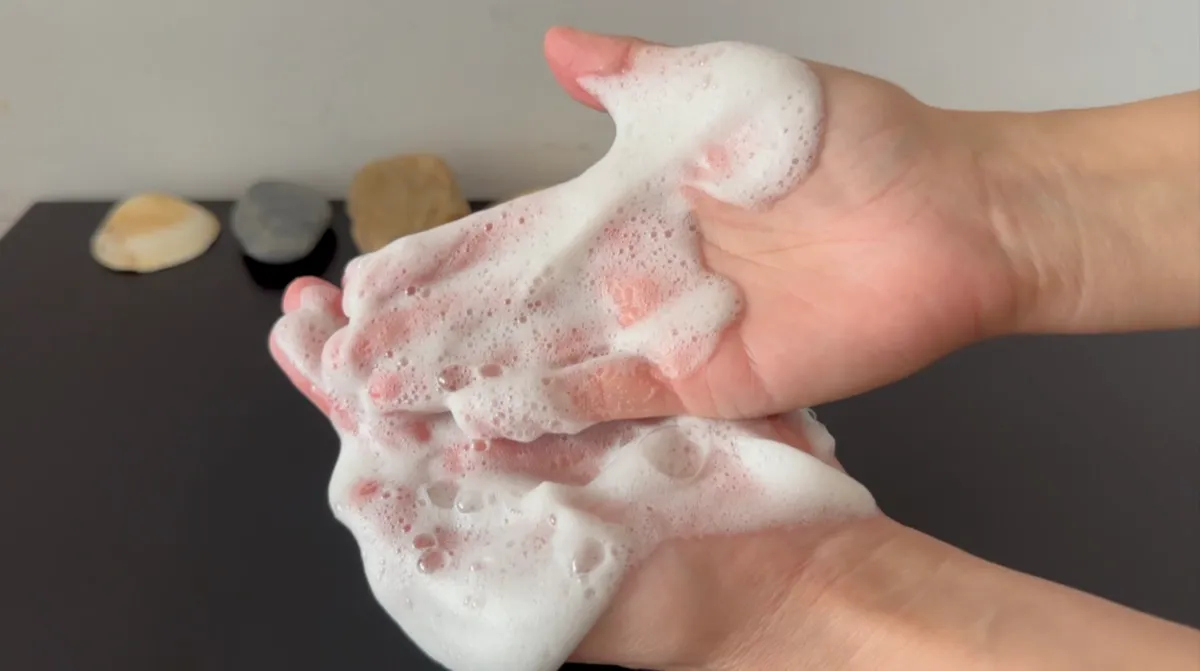
In this formula, the surfactant creates a light foam, especially when used with a foaming pump bottle.
About This Cleansing Formula
This formulation is a gentle exfoliating cleanser designed to do more than just clean the skin. It combines three key functions — cleansing, exfoliation, and hydration — in a way that keeps the formula effective but still suitable for regular use.
The cleansing part comes from a very mild surfactant system, which removes dirt, oil, and daily buildup without stripping the skin or leaving it feeling tight. This makes it suitable even for people who prefer a softer, low-foam cleansing experience.
The exfoliation is provided by a combination of succinic acid and lactic acid, which work in different but complementary ways. Lactic acid gently exfoliates the surface of the skin by loosening dead skin cells, helping improve texture, brightness, and overall smoothness. At the same time, it has humectant properties, meaning it helps attract and retain moisture. Succinic acid supports this by providing a mild keratolytic effect while also offering antimicrobial and balancing properties, making it particularly useful for skin that is prone to congestion or breakouts.
Because both acids are used at moderate levels, the exfoliation remains controlled and gentle, allowing the cleanser to be used more frequently than stronger acid treatments, while still providing visible improvements over time.
Hydration is maintained through humectants like glycerin and propanediol, which help prevent the dryness that can sometimes come with cleansing and exfoliation. This balance is important, as it allows the product to cleanse and renew the skin without disrupting the skin barrier.
Overall, this formula is designed to be a daily-use, low-irritation exfoliating cleanser that gradually improves skin texture, clarity, and comfort without the harshness of stronger treatments.
pH for This Cleanser
The target pH of 4.5–5.0 is chosen to balance effectiveness, skin compatibility, and formula stability.
First, both lactic acid and succinic acid are pH-dependent — they only work properly within a certain range. If the pH is too high, the acids become less active and the exfoliating effect is reduced. At a pH around 4.5–5.0, the acids still provide gentle exfoliation, but without being too aggressive.
Second, this pH range is close to the natural pH of the skin (around 4.7–5.5). Keeping the formula in this range helps maintain the skin barrier and reduces the risk of irritation — especially in a product meant to be used regularly.
Third, the surfactant system in this formula, particularly Sodium Olivamphoacetate, is compatible with slightly acidic conditions, so it continues to cleanse effectively without becoming harsh or unstable.
Finally, the preservative system also needs to function properly at the chosen pH. Many preservatives used in water-based formulas perform well in this slightly acidic range, helping ensure the product remains safe over time.
Why Use a Foaming Bottle for This Formula?
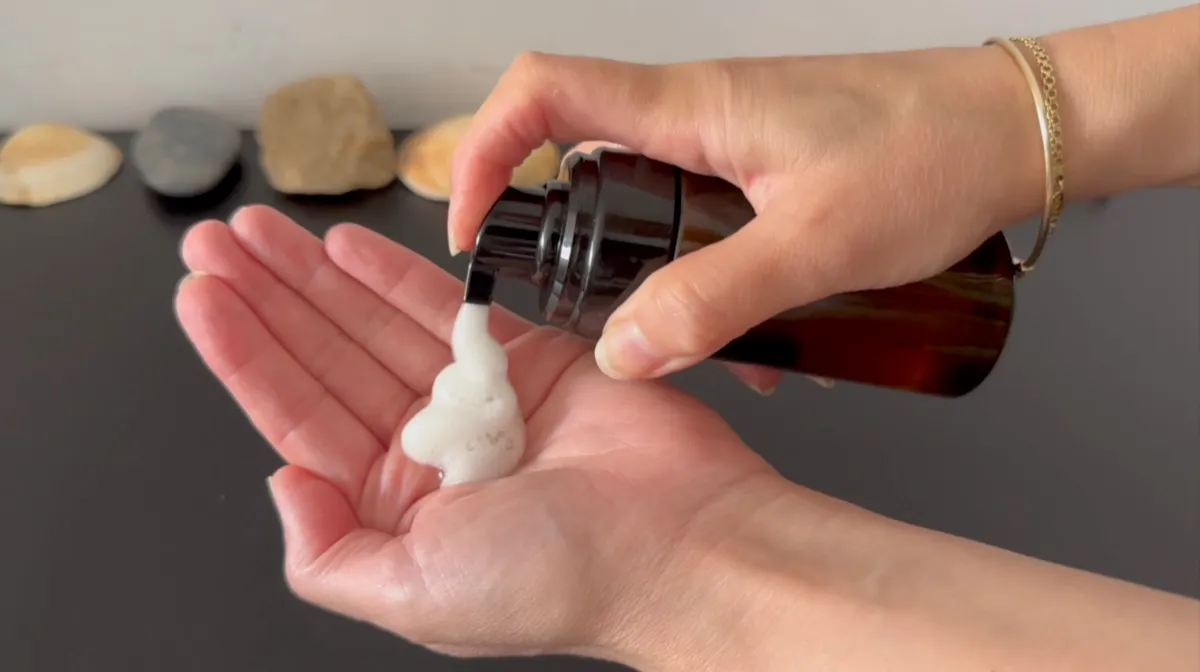
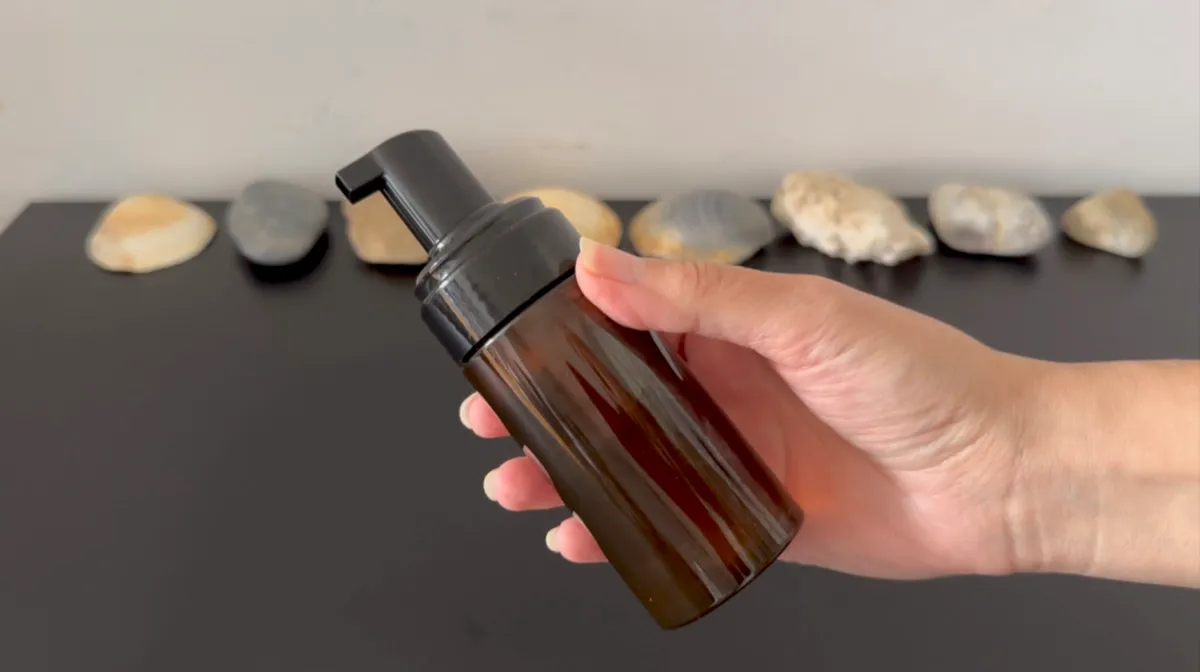
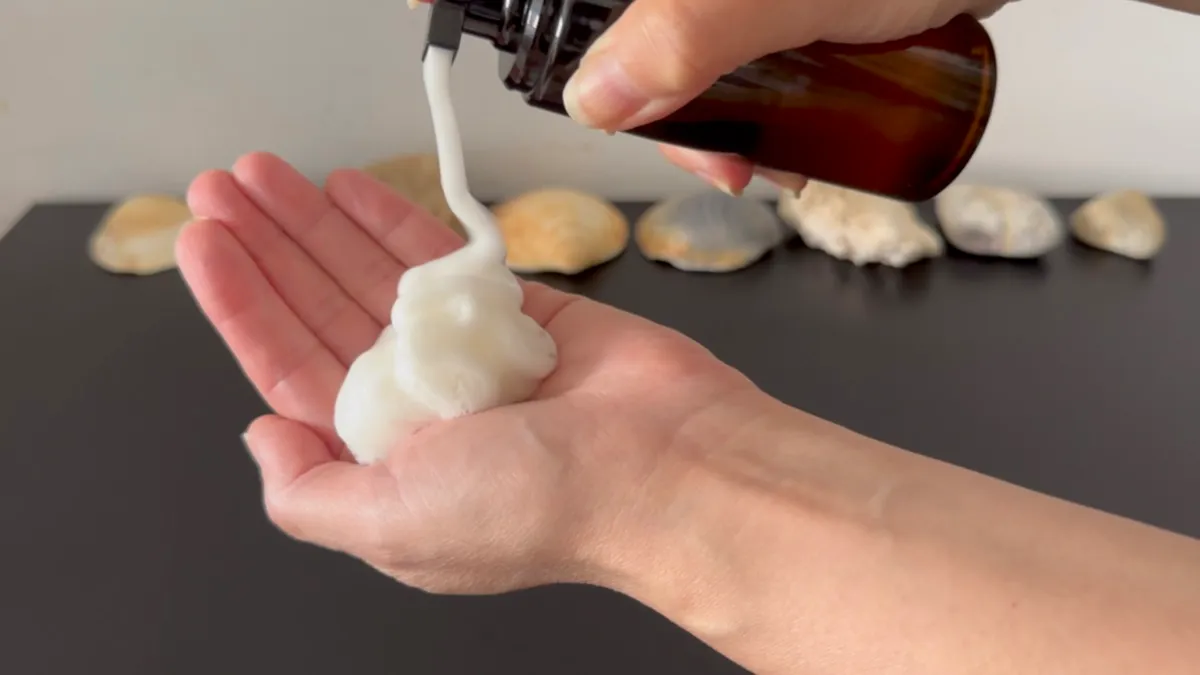
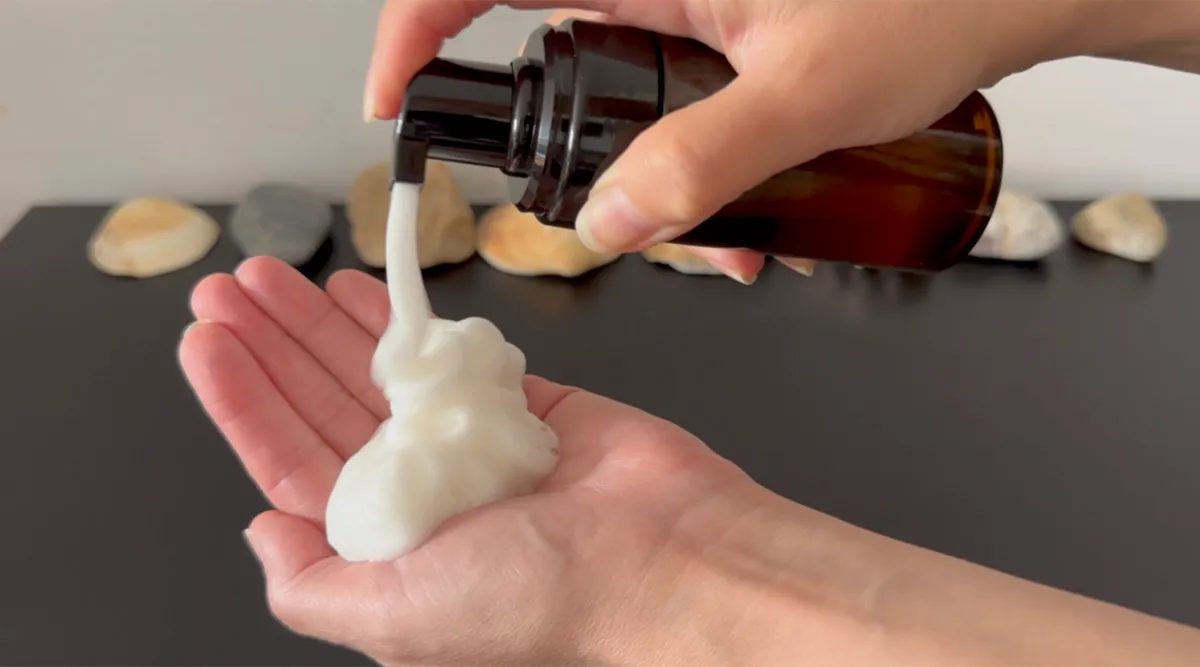
A foaming bottle is one of those little packaging choices that can completely change how a cleanser feels. The formula itself is very fluid, almost like water, but once it passes through the pump it comes out as a soft foam.
The way it works is simple: when you press the pump, the bottle pulls up the liquid cleanser and mixes it with air inside the pump mechanism. The air-and-liquid mixture then passes through a fine mesh screen, which breaks it into tiny bubbles and creates the foam before it comes out.
This is why foaming cleansers don't need to be thick to feel nice on the skin — the bottle creates the texture for you. It also helps the cleanser spread more easily, feel lighter, and use less product each time.
For this reason, the formula should stay very fluid. If you add too much thickener, the pump can clog, get stuck, or stop creating foam properly.
Why This Is a Fragrance-Free Formula
This formula is intentionally fragrance-free to keep it as gentle and skin-friendly as possible, especially because it already contains active ingredients like lactic acid and succinic acid.
Fragrance — whether synthetic or from essential oils — is one of the most common causes of irritation in skincare products. When combined with exfoliating acids, the risk of sensitivity, redness, or discomfort can increase. Leaving out fragrance keeps the formula more minimal and focused on function rather than scent.
Another important reason is that this cleanser is designed for regular use, sometimes even daily. A fragrance-free approach makes it more suitable for a wider range of skin types.
Removing fragrance also helps avoid potential interactions with other ingredients. Some fragrance components can be unstable in acidic environments or may interfere with the overall balance of the formula.
You can add a gentle scent by replacing part of the distilled water with a hydrosol such as rose, chamomile, or lavender hydrosol. This gives the cleanser a light natural aroma without using fragrance or essential oils, but you should still check supplier recommendations, preservation, and compatibility.
The Ingredients
Distilled Water
Distilled water is the base of this cleanser and makes up most of the formula. It dissolves the water-soluble ingredients, helps create the liquid texture needed for a foaming bottle, and allows the cleanser to spread easily over the skin.
Always use distilled or deionized water, not tap water — tap water contains minerals and impurities that can affect stability, preservation, and texture.
Alternatives: You can replace part of the water with a hydrosol such as rose water or chamomile water, but keep in mind that botanical waters can make the formula more delicate and may shorten stability if not preserved properly.
Glycerin
Glycerin is a humectant, meaning it attracts and retains water in the skin. In this formula it helps counterbalance the cleansing and exfoliating effects, preventing the skin from feeling dry or tight after use.
Because this cleanser contains acids, glycerin plays an important role in maintaining skin comfort and hydration. At this level, it provides hydration without making the formula overly sticky or affecting the foam.
Alternatives:
- Betaine — softer skin feel, less sticky than glycerin, very compatible with surfactants.
- Sodium PCA (0.3%) — stronger humectant, used at lower levels. Works well in fluid systems but can feel slightly tacky if overused. Use Sodium PCA at 0.3% and add the difference (2.7%) to the distilled water.
Propanediol
Propanediol is a multifunctional ingredient that acts as a humectant and solvent. It helps improve hydration, enhances the feel of the formula, and supports the distribution of other ingredients. In this formula it also helps reduce the stickiness from glycerin and improves the overall sensory experience.
It is especially useful in low-viscosity systems because it keeps the formula feeling light and smooth.
Alternatives:
- Pentylene Glycol — very similar in function but slightly more active in terms of preservation support. It has mild antimicrobial properties that can boost the preservative system and help extend shelf life. It also gives a smooth, slightly "silky" skin feel and can reduce tackiness more effectively than propanediol.
- Butylene Glycol — also works as a humectant and solvent, but feels a bit lighter and less conditioning than propanediol. It does not have the same preservative-boosting effect as pentylene glycol and is more neutral in the formula. Easy to work with and widely compatible, but offers fewer additional benefits beyond hydration and solubilization.
Disodium EDTA
Disodium EDTA is a chelating agent. It binds metal ions from water or raw materials, helping improve formula stability and preservative performance.
This is especially helpful in water-based cleansers because metal ions can interfere with preservation, affect color, and reduce stability over time.
Alternatives:
- Sodium Phytate — a more natural-style chelator, suitable if you want a more natural positioning. Usually weaker than EDTA.
- GLDA — another biodegradable chelator that works well in many formulas.
A Quick Note on Chelating Agents
Chelating agents are essential ingredients in many skincare formulations, including face creams and gels. Their main role is to bind and neutralize metal ions such as iron, calcium, and magnesium, which can be present in both water and raw materials.
These metal ions can negatively affect a formula in several ways. They can catalyze oxidation, leading to the degradation of sensitive ingredients like antioxidants, vitamins, and oils. Chelating agents prevent this by binding to the metals, helping to stabilize the formula and extend its shelf life. They also improve preservative performance, as metal ions can interfere with preservative systems if left unbound.
Without a chelating agent, metal contamination may cause a product to discolor, develop off-odors, or separate over time — resulting in a product that is less stable, less effective, and less pleasant to use.
What If You Don't Have a Chelating Agent?
When making DIY skincare products and a chelating agent isn't available, there are several steps you can take to reduce instability:
- Always use distilled water, which is free from mineral impurities.
- Choose high-quality materials that are less likely to contain metal contaminants.
- Add antioxidants such as vitamin E (for products with oils), green tea extract (water-based), or grapefruit extract (water-based). While these are not replacements for chelating agents, they help slow oxidation.
- Expect a shorter shelf life. Without a chelator, it is best to make small batches and use the product within three months.
- Store the product in airtight, preferably dark containers, and protect it from heat and light.
- Regularly monitor the product's appearance, smell, texture, and pH. Any noticeable changes may indicate degradation.
If you are not using Disodium EDTA, add 0.1% to the distilled water to adjust the formula to 100%.
Sodium Olivamphoacetate
Sodium Olivamphoacetate is the main cleansing ingredient in this formula, and it plays a central role in how the product performs on the skin. It is an amphoteric surfactant derived from olive oil fatty acids, which means it has a dual nature — it can act as a mild cleanser while also providing a conditioning effect. This is very different from stronger surfactants, which tend to focus only on removing oil and dirt.
In this formula it lifts and removes impurities from the skin while keeping the overall feel gentle and balanced. It surrounds oil, dirt, and debris on the skin and allows them to mix with water so they can be rinsed away easily. Because of its amphoteric nature, it does this without aggressively disrupting the skin barrier — especially important in a cleanser that also contains exfoliating acids.
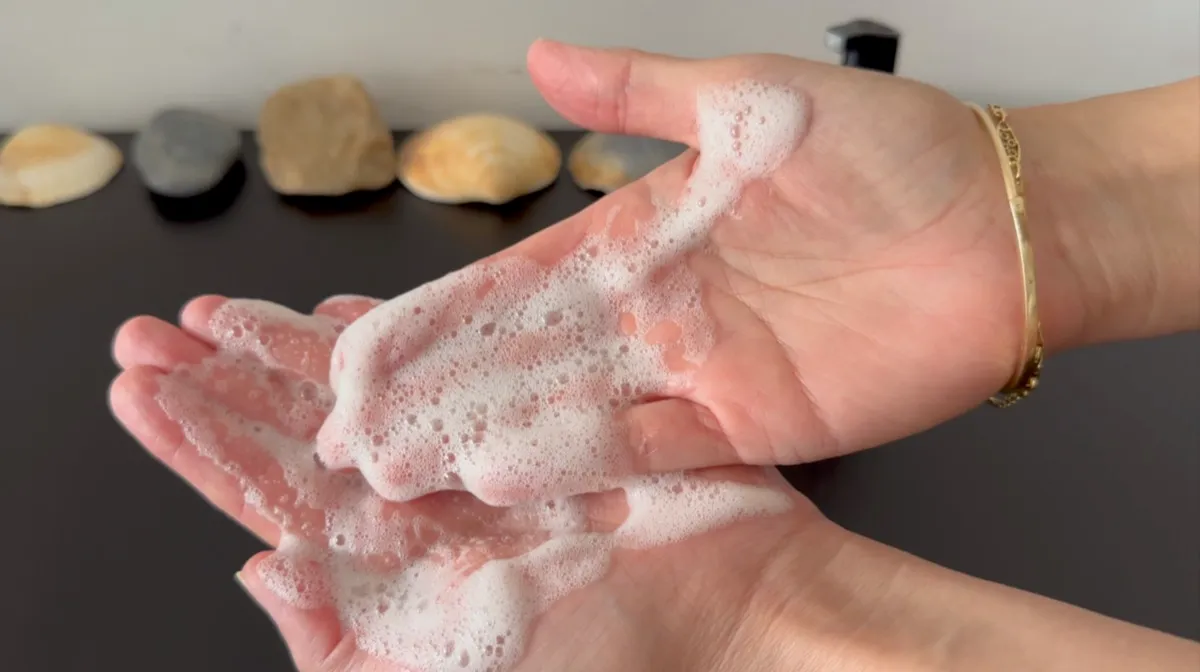
One reason this ingredient works particularly well here is the low-viscosity, foaming pump format. Sodium Olivamphoacetate performs very well in liquid systems and produces a soft, light foam when used in a foaming bottle. The pump introduces air into the formula, and the surfactant stabilizes that air to create foam. This gives a pleasant foaming experience without needing a thick gel or a high concentration of surfactants.
It also reduces the irritation potential of the formula. Since the cleanser contains both lactic acid and succinic acid, there is already some exfoliating activity. Using a harsh surfactant in this context could make the formula too aggressive. Sodium Olivamphoacetate balances this by providing gentle cleansing and a slightly conditioning after-feel, so the skin does not feel tight or stripped after rinsing.
It is also compatible with a slightly acidic pH, which is essential for this formulation. Many surfactants perform poorly or become irritating at lower pH levels, but this one remains stable and effective in the target range of around pH 4.5–5.0. This allows the acids to work properly without compromising the cleansing system.
Alternatives:
If you don't have Sodium Olivamphoacetate, you can replace it — but this is one of the most important substitutions in the formula because it will directly affect how the product feels, foams, and cleanses.
Coco-Glucoside — a non-ionic surfactant derived from coconut and sugar, one of the most common alternatives in natural-style formulations. Provides good cleansing ability, moderate foam, and a relatively mild skin feel. Compared to Sodium Olivamphoacetate, it can feel slightly stronger and more cleansing, tends to raise the pH (so you may need to adjust it back down), and does not provide the same conditioning effect.
Decyl Glucoside — another non-ionic surfactant, known for being one of the gentlest options available. Provides very mild cleansing, light foam, and good compatibility with sensitive skin. Compared to Sodium Olivamphoacetate, it produces a lighter, less creamy foam, feels slightly less conditioning, and may require more careful pH adjustment depending on the final formula.
Replacing the surfactant is not just a simple swap. It changes foam quality, cleansing strength, skin feel after rinsing, and pH behavior. When using an alternative: always test a small batch, check and adjust the final pH, and observe how the foam performs in your bottle.
Succinic Acid
Succinic acid is a multifunctional active that works especially well in cleansing formulas designed for skin that is prone to congestion, oiliness, or breakouts. It is considered a mild exfoliating acid, but it behaves quite differently from classic AHAs or BHAs.
In this formula it provides a gentle keratolytic effect — helping loosen and remove buildup from the surface of the skin without being overly aggressive. This makes it useful for improving skin texture gradually rather than causing strong or immediate exfoliation.
One of its main advantages is its antimicrobial activity, which helps reduce the presence of bacteria on the skin. This is why it is often used in products targeting blemish-prone skin. It can also help regulate excess oil, making the skin appear more balanced over time.
Another benefit is that succinic acid supports ingredient penetration. By slightly reducing the thickness of the outer layer of the skin, it allows other actives in the formula to work more effectively. Here it works together with lactic acid to create a balanced exfoliation system that is effective but still suitable for frequent use.
Lactic Acid (80% Solution)
Lactic acid is an alpha hydroxy acid (AHA) widely used in skincare for its ability to exfoliate the skin while also providing hydration. In most formulations it is supplied as an 80% aqueous solution, which means the raw material itself already contains water and must be diluted to reach the desired final concentration.
In this formula it provides surface exfoliation, helping break down the bonds between dead skin cells so they can be removed more easily. This leads to smoother skin, improved brightness, and a more even texture over time.
One of the key advantages of lactic acid is that it is also a humectant — it helps attract water to the skin. This makes it less drying than some other acids and more suitable for formulas intended for regular use.
Because the lactic acid you're using is an 80% solution (not pure acid), the actual amount of active exfoliating acid in the formula is lower than the percentage you add.
In this formula we use 1.5% of lactic acid (80%), which means: 1.5% × 0.8 = 1.2% active lactic acid — gentle and suitable for regular use.
Lactic acid is also pH-dependent — it only works properly within a certain pH range. In this cleanser the target pH is around 4.5–5.0, which keeps the formula gentle while still allowing some exfoliating activity.
Compared to other AHAs, lactic acid is gentler than glycolic acid, hydrates more, and is better suited for sensitive or dry skin.
Green Tea Extract
Green tea extract is included in this formula to provide antioxidant protection and soothing support — especially important in a cleanser that also contains exfoliating acids. While the acids work to renew the skin, green tea helps keep the formula balanced by reducing potential irritation and supporting overall skin comfort.
It is rich in polyphenols, particularly catechins, which help neutralize free radicals and protect the skin from environmental stress. Green tea also has anti-inflammatory properties, which can help calm redness and make the cleanser feel less aggressive, even with regular use.
In this formula green tea extract acts as a supporting ingredient — not the main active — but it plays an important role in making the cleanser feel more complete and skin-friendly. It is especially beneficial for dull skin, oily or combination skin, blemish-prone skin, and skin that is using exfoliating products regularly.
Because it is water-based, it integrates easily into the formula and does not affect texture or foam.
Alternatives:
Cucumber Extract — a good alternative if you want a lighter, fresher, more hydrating feel. Known for its soothing properties, refreshing effect, and ability to help reduce dehydration. Compared to green tea, it is less antioxidant-focused, more hydration- and comfort-focused, and gives a more "fresh" skin feel rather than being protective.
Licorice Extract — a stronger alternative if you want more targeted skin benefits, especially for uneven skin tone, redness, and irritation. It contains compounds like glabridin, which help reduce inflammation, support brightening, and calm the skin. Compared to green tea it is more active and targeted, better for tone and pigmentation concerns, and slightly less focused on antioxidant protection.
Preservative
Because this is a water-based formula, a preservative is essential. The preservative used here has the INCI Benzyl Alcohol, Dehydroacetic Acid — a broad-spectrum, water-soluble preservative that performs in a pH range of 2–7. It's effective at low percentages, compatible with most ingredients, and accepted in many "natural cosmetics" standards.
A Note on Preservatives
Preservatives are an essential part of any water-based cosmetic formulation. While this formula includes a specific preservative, you may choose to use a different one depending on availability, personal preference, or formulation goals.
If you decide to substitute the preservative, it is important to understand that preservatives are not interchangeable on a 1:1 basis. Each preservative system has its own recommended usage rate, pH range, solubility, and compatibility profile.
Before making any substitution, always review the supplier's technical information for the preservative you plan to use. Pay close attention to:
- The recommended usage percentage and adjust your formula accordingly
- The effective pH range, ensuring your final formulation falls within that range
- The solubility (water phase, oil phase, or both), so it is added in the correct phase
- Any temperature limitations, as some preservatives must be added during the cool-down phase
- Known incompatibilities with certain ingredients, such as acids, proteins, or electrolytes
After selecting a preservative, you may need to slightly adjust the formulation (typically the water content) to ensure the total remains at 100%.
Different preservatives also vary in strength and spectrum. Some systems are more robust than others, especially in emulsions or formulas containing plant extracts. Always follow supplier recommendations rather than relying on general usage ranges.
Method
Now that we've covered the ingredients and their roles, let's move on to making the formula.
1. Weigh the distilled water and add the Disodium EDTA. In a clean, disinfected beaker, weigh the distilled water and add the Disodium EDTA. Stir until fully dissolved.
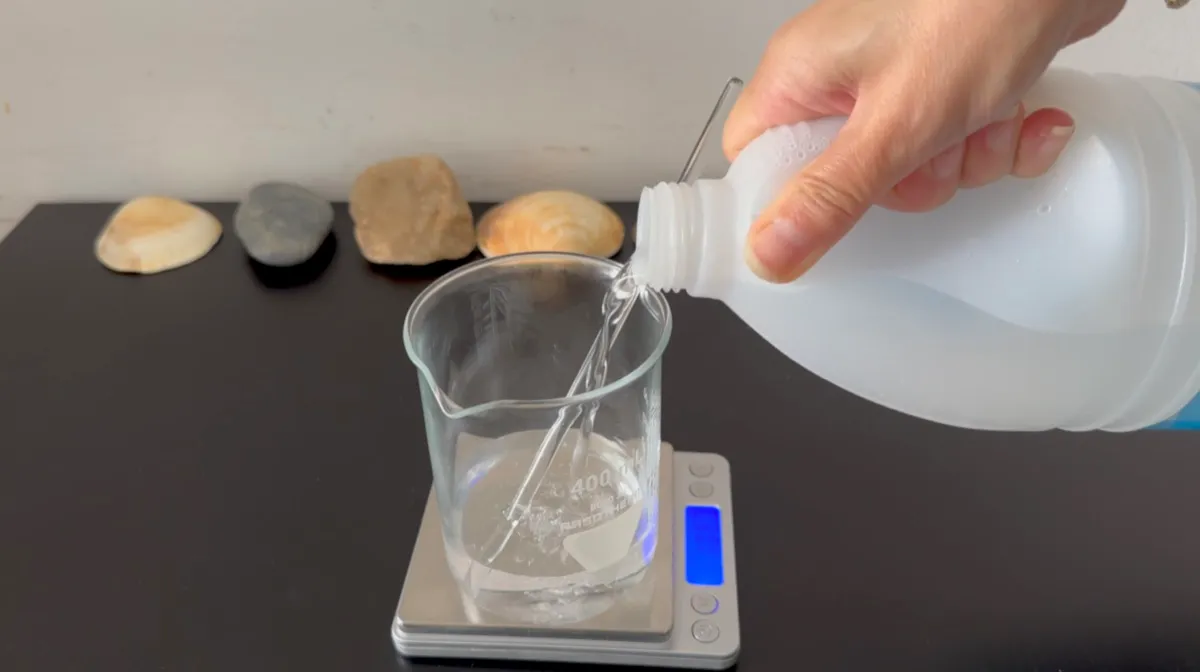
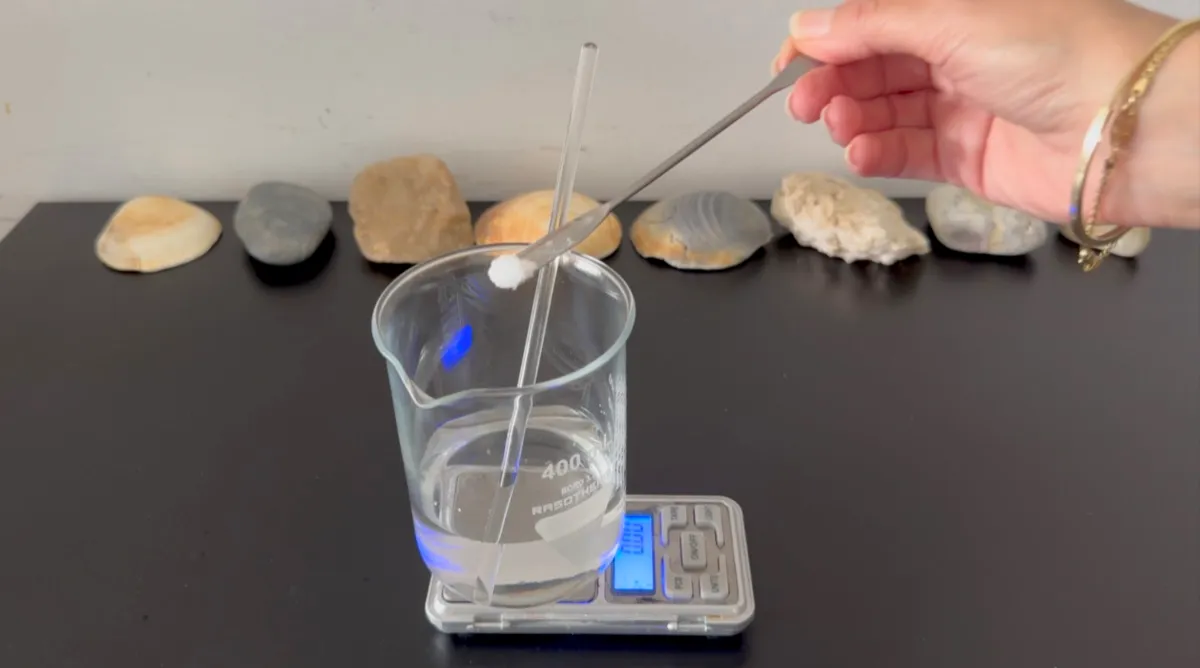
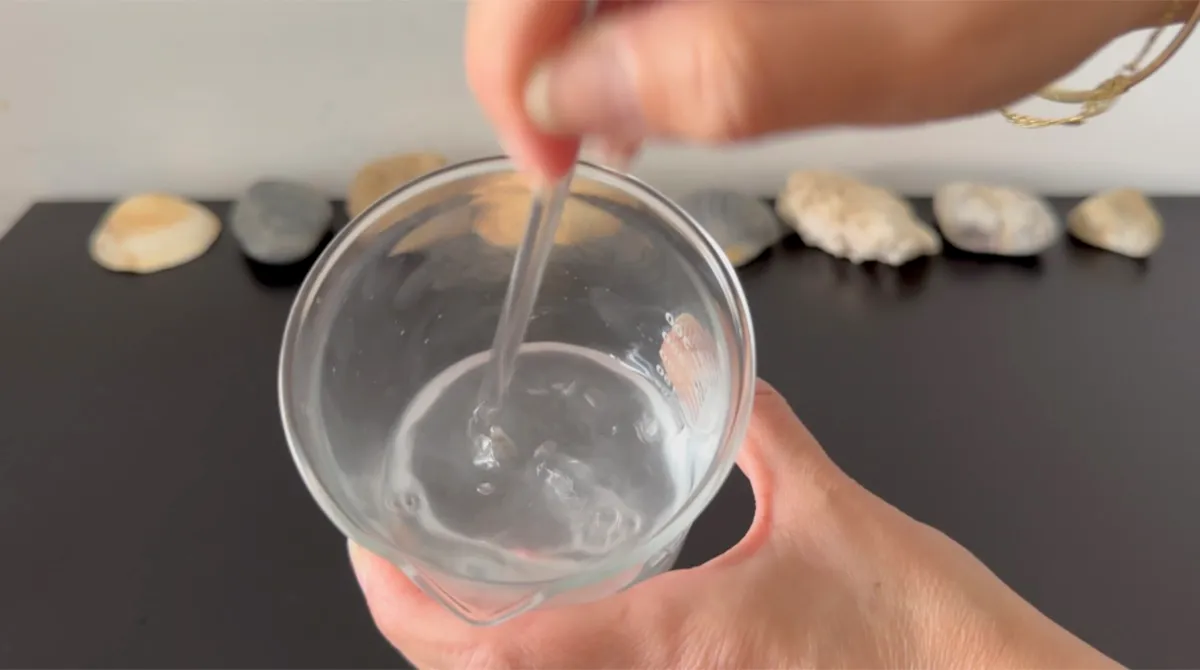
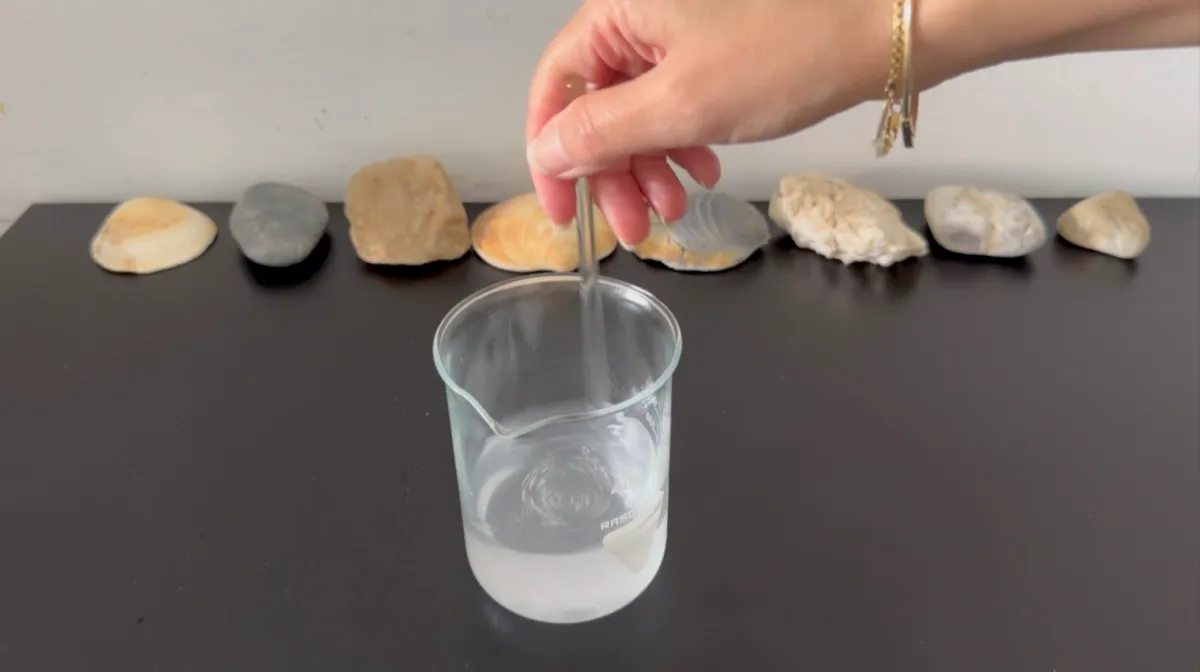
2. Add the glycerin and propanediol. Mix gently until the solution is uniform.
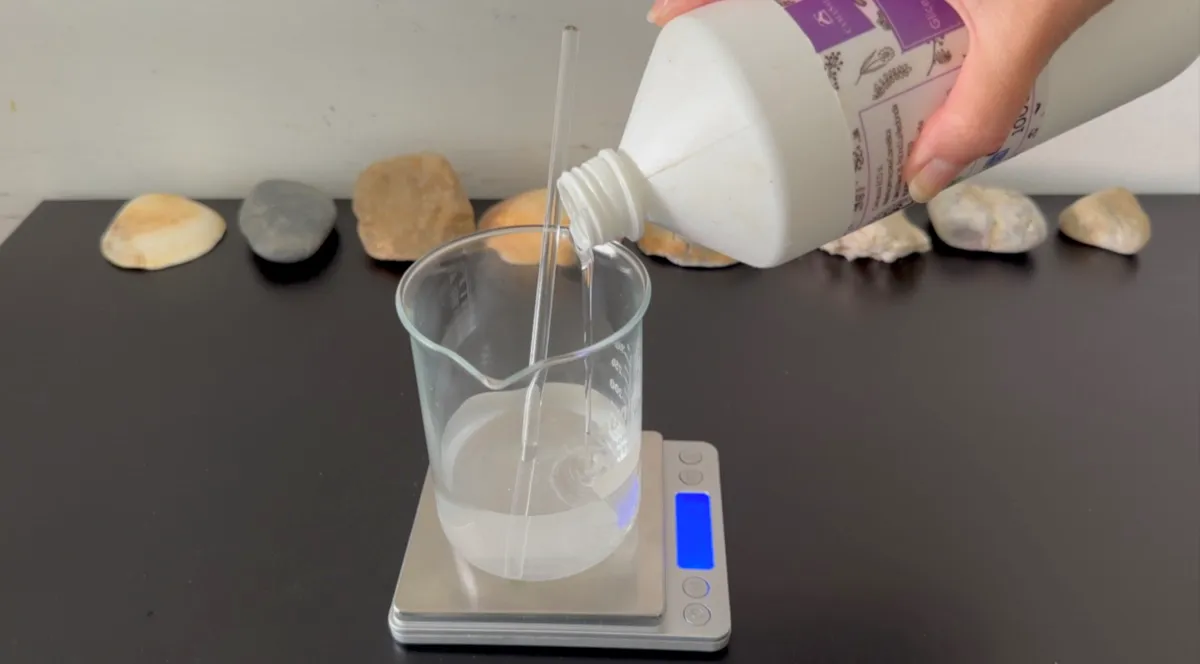
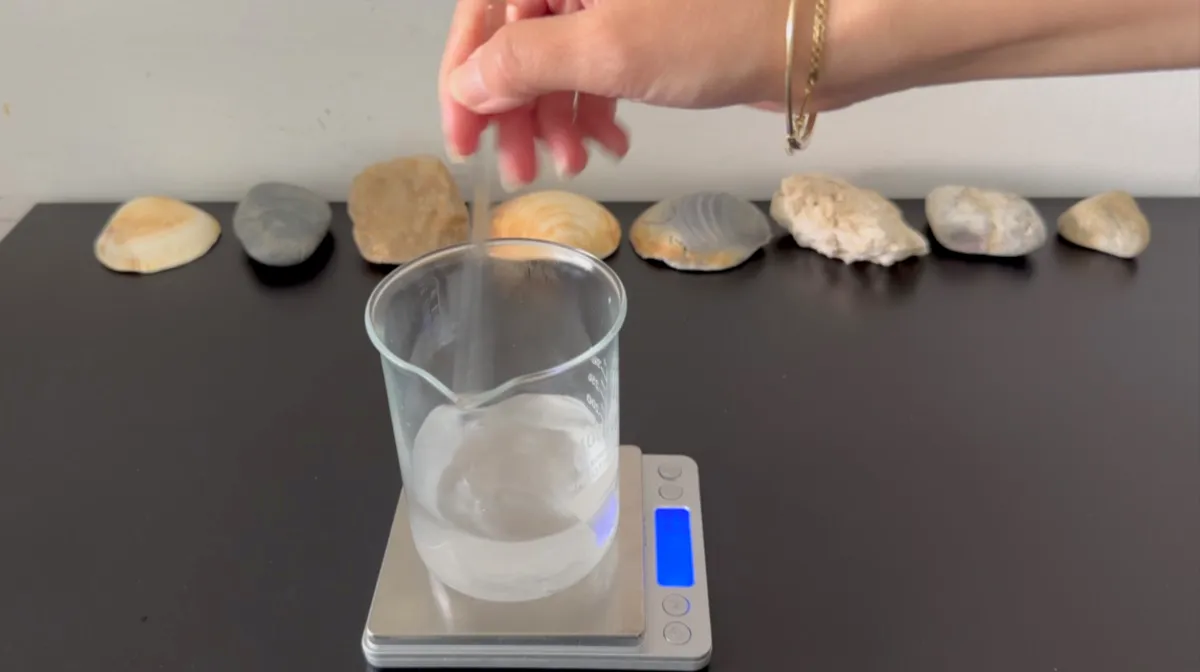
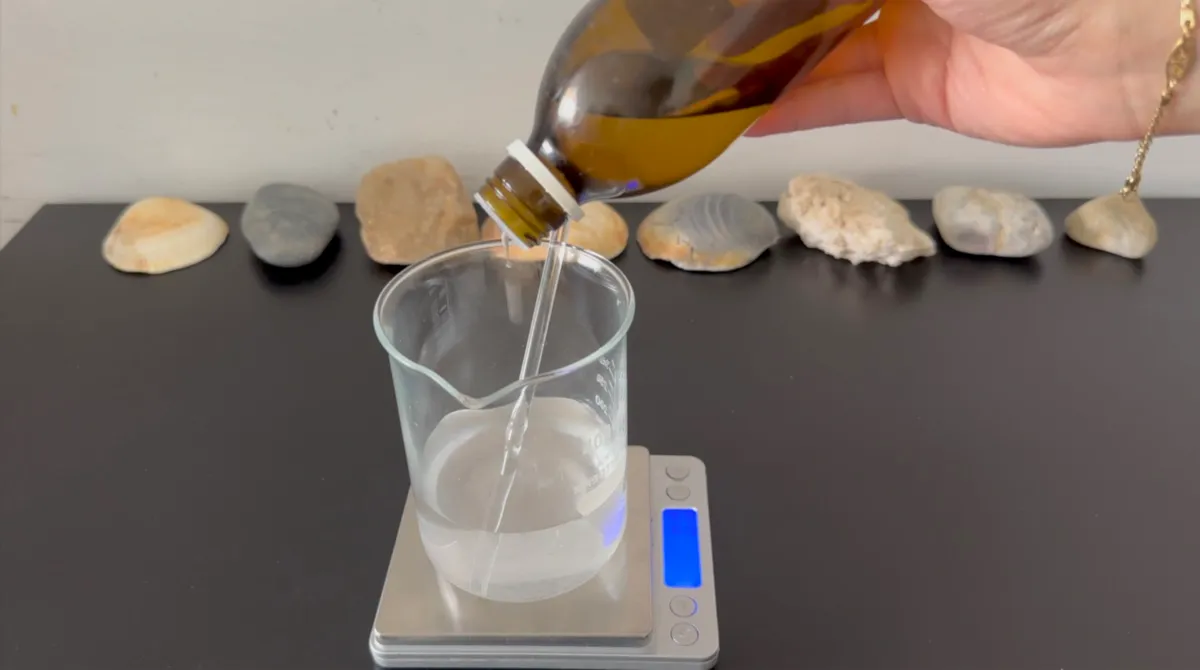
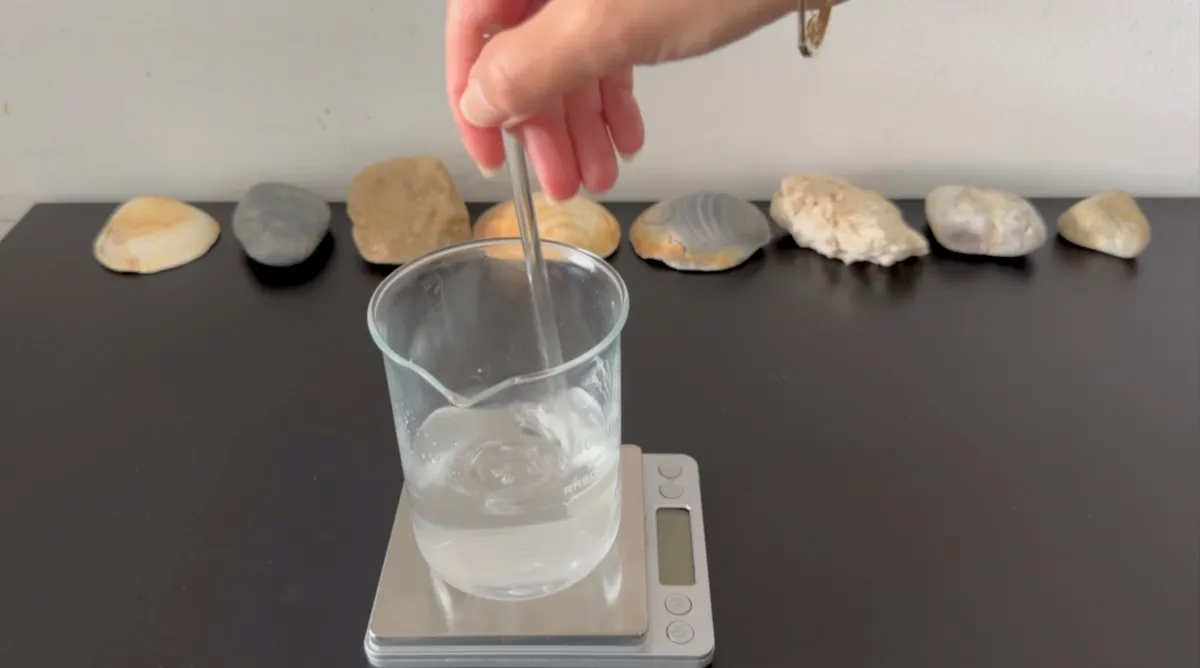
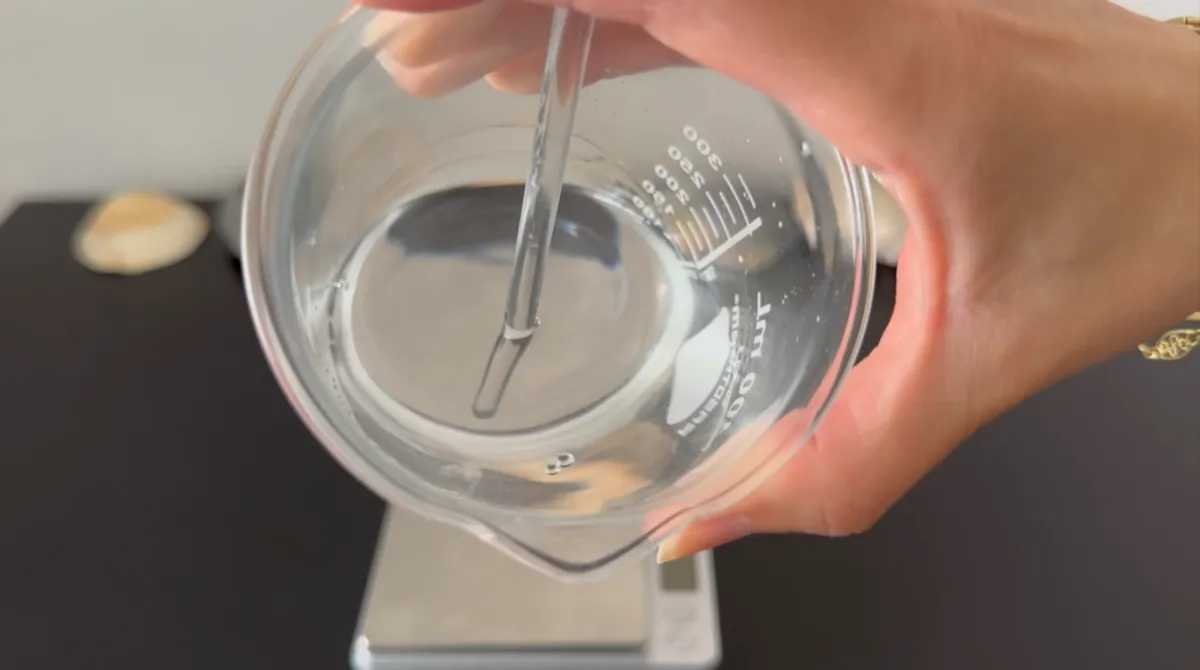
3. Add the succinic acid and mix until fully dissolved. Slight heating (around 60°C) may help if needed, but avoid overheating.
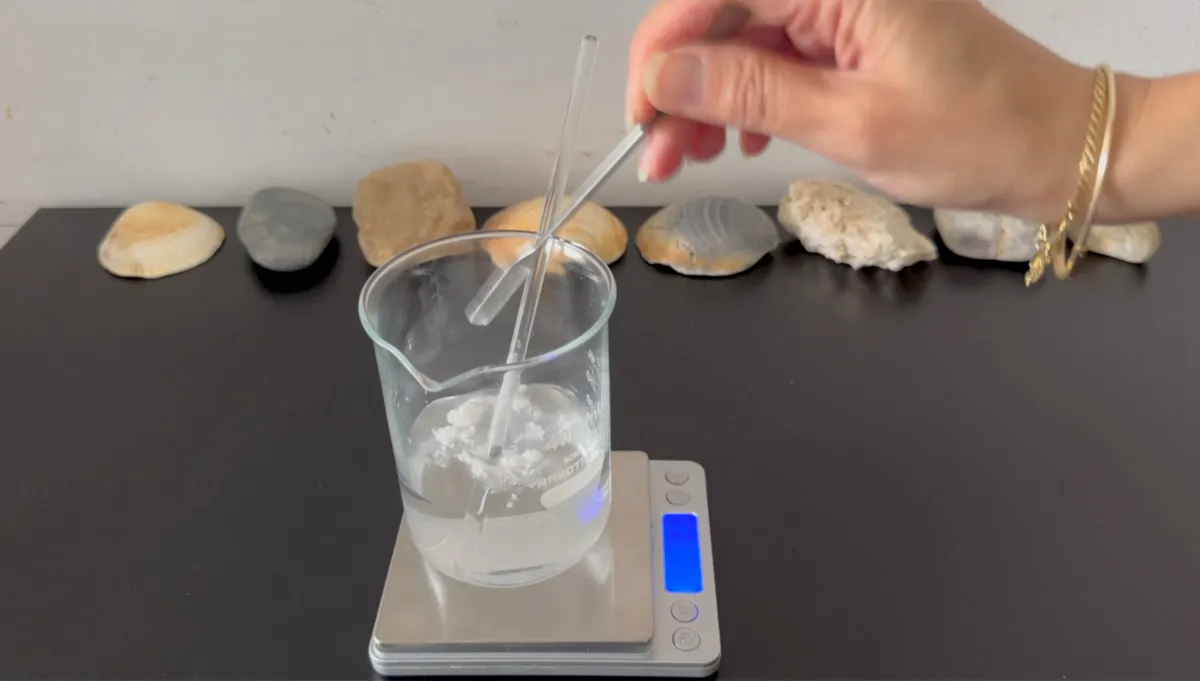
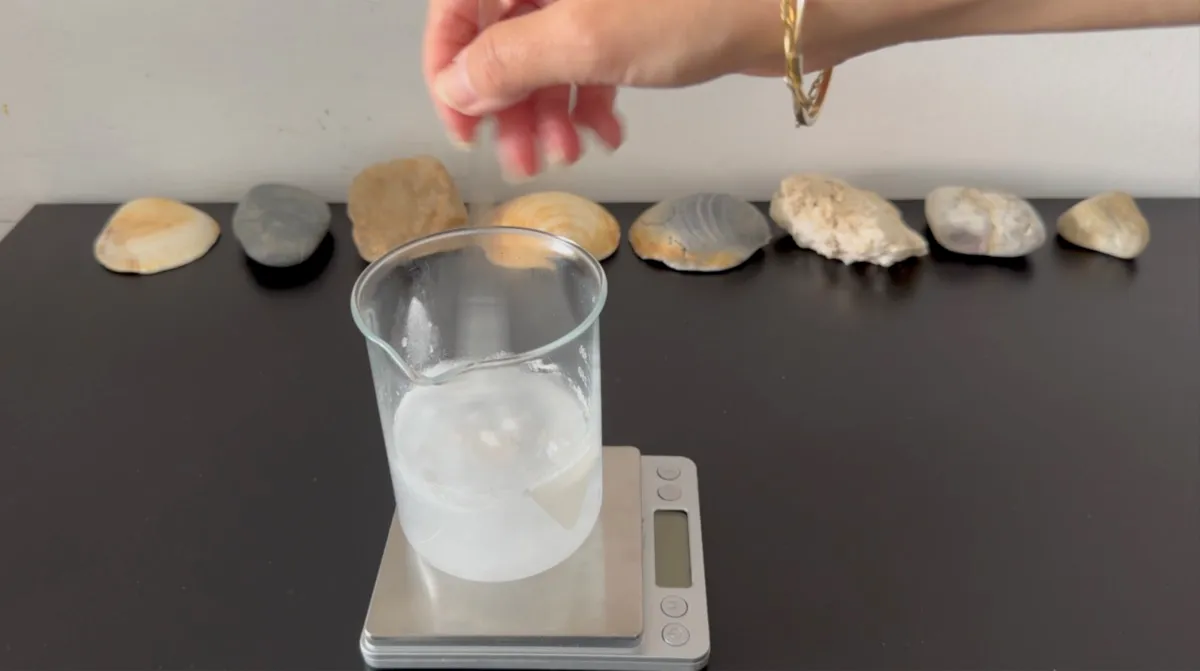
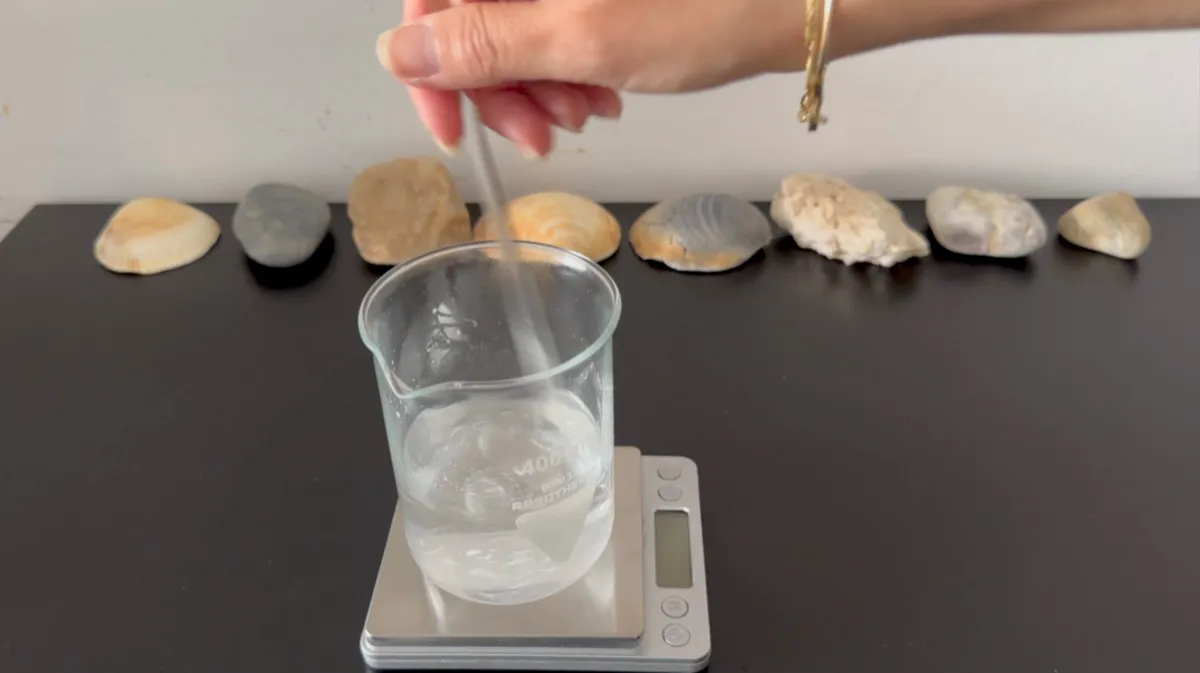
4. Add the lactic acid (80% solution) and mix thoroughly. The mixture will now be slightly acidic, so avoid adding any ingredients that are not compatible with low pH.
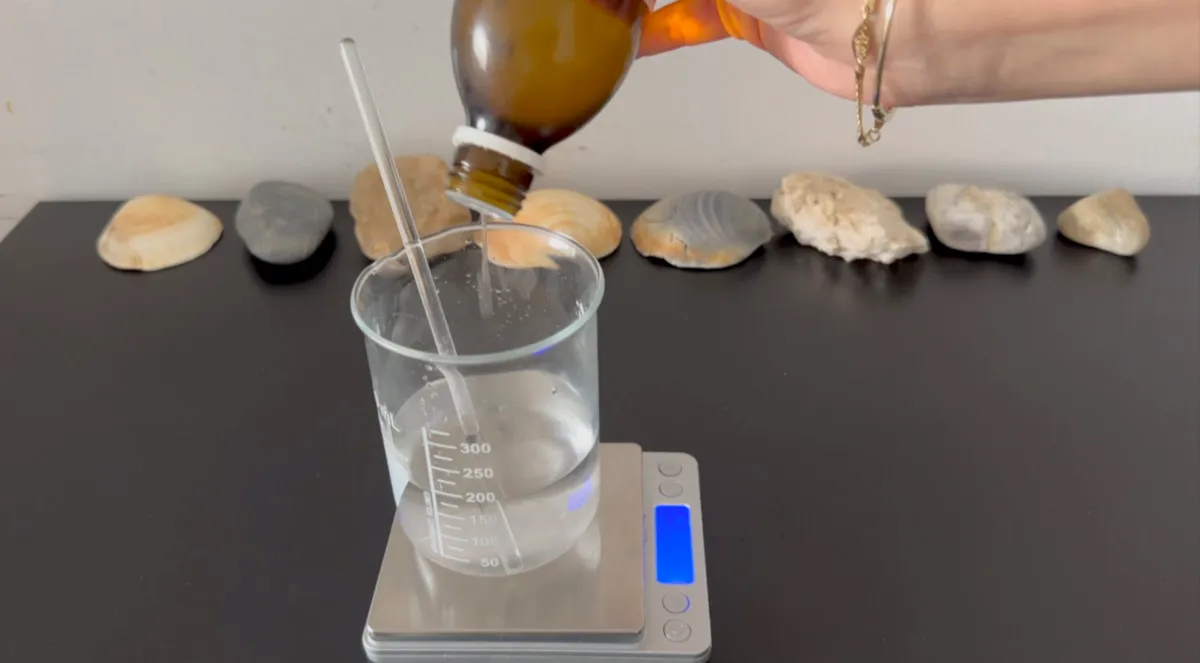
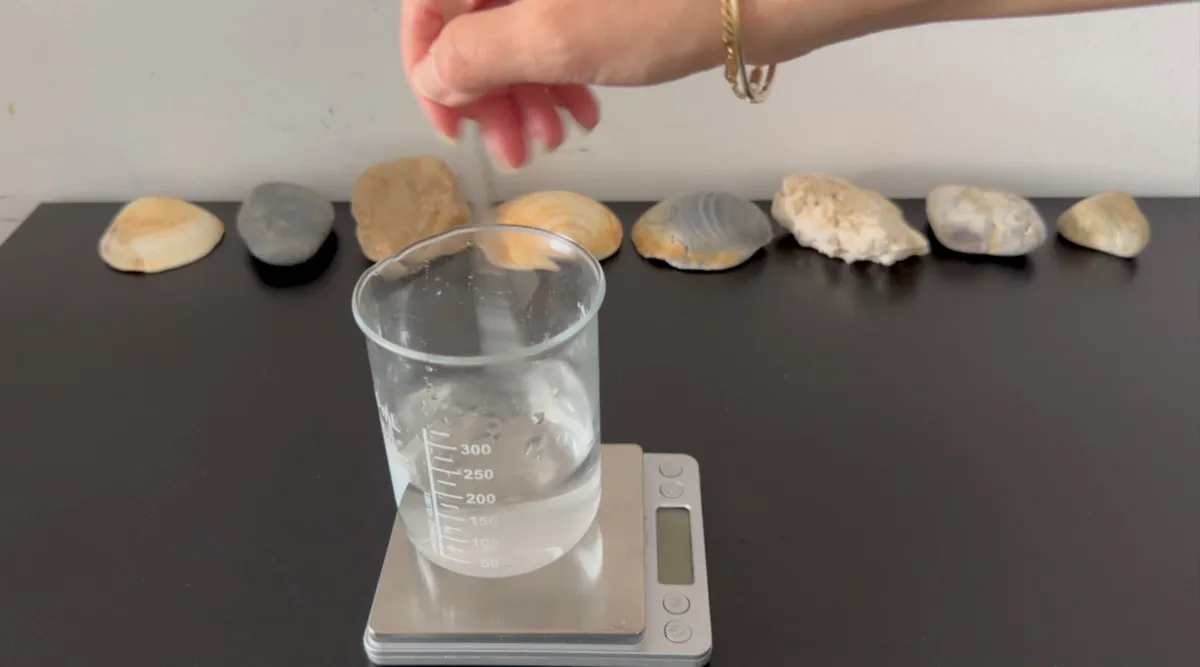
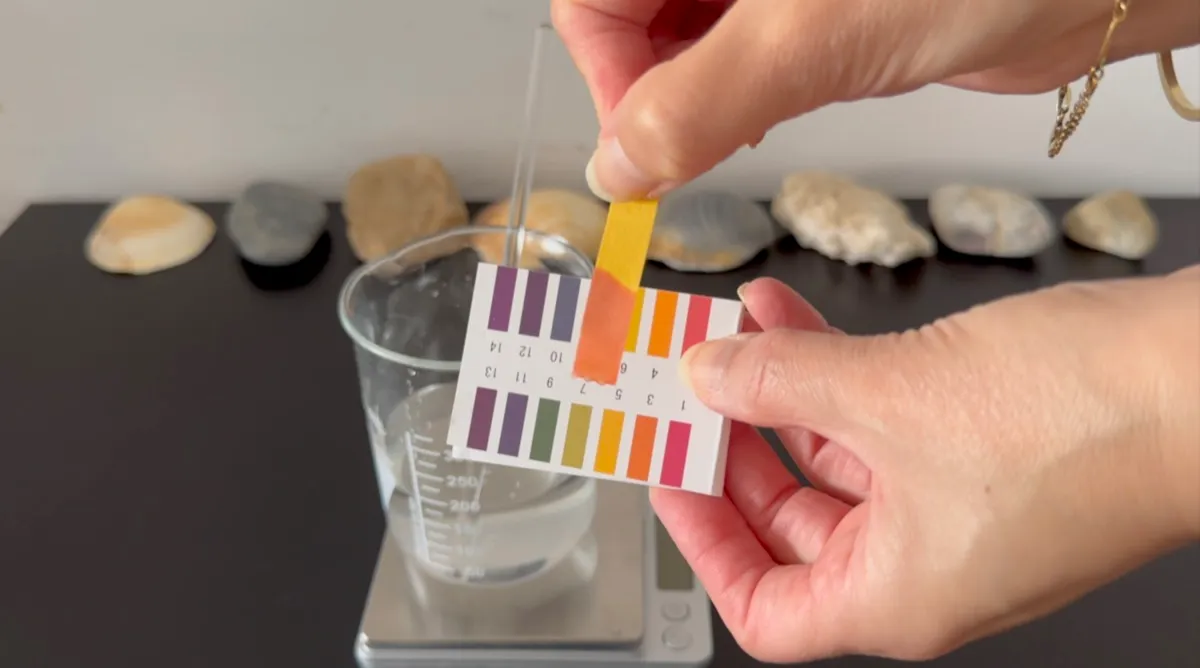
5. Add the green tea extract and mix gently. Green tea extract should be added when the temperature is below 40°C.
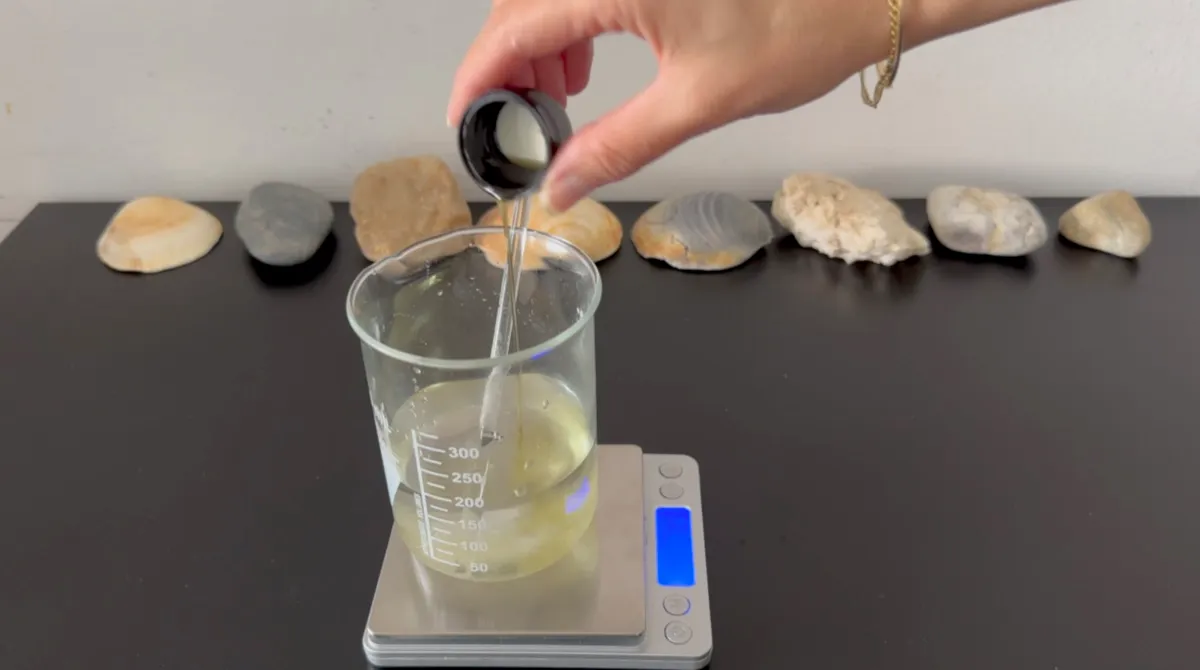
6. Add the surfactant (Sodium Olivamphoacetate) slowly while stirring. Avoid vigorous mixing at this stage to prevent excessive foam formation.
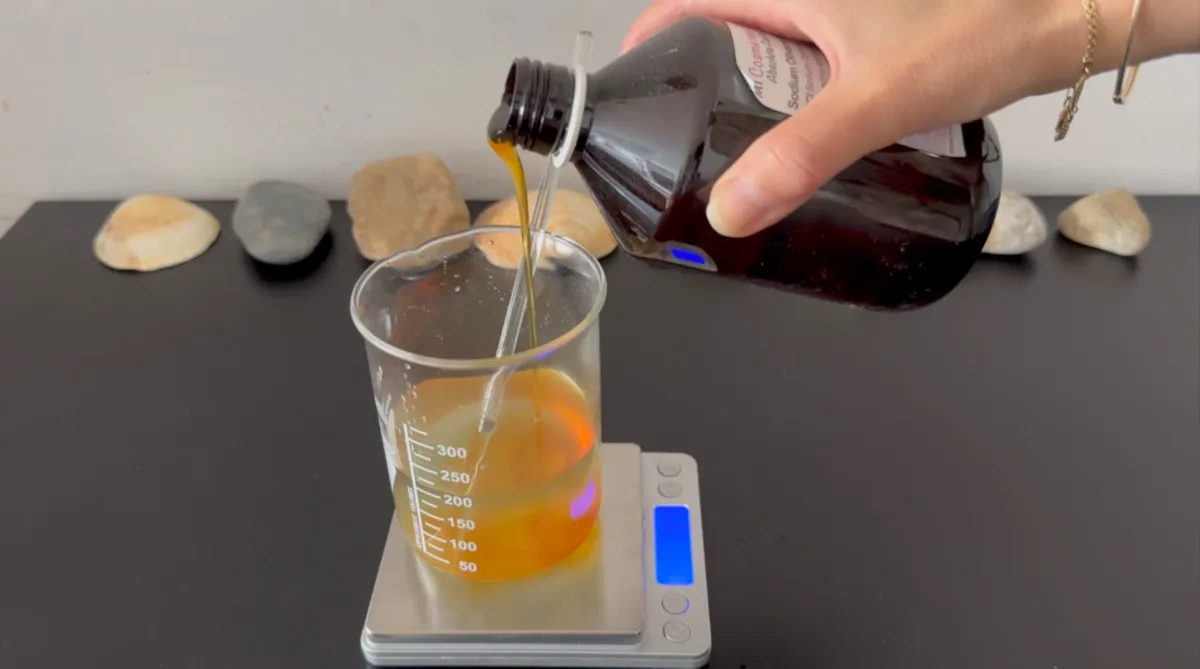
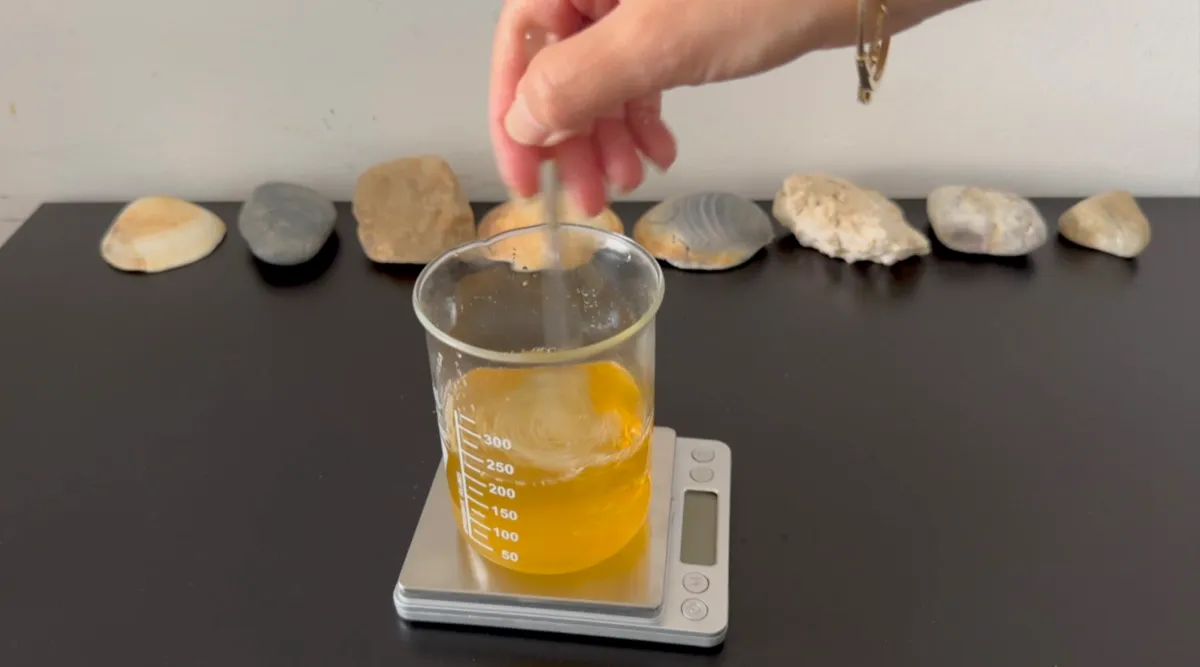
7. Add the preservative and mix gently until fully incorporated.
8. Check the final pH and adjust if necessary to stay within the 4.5–5.0 range. To learn more about pH adjustments click here.
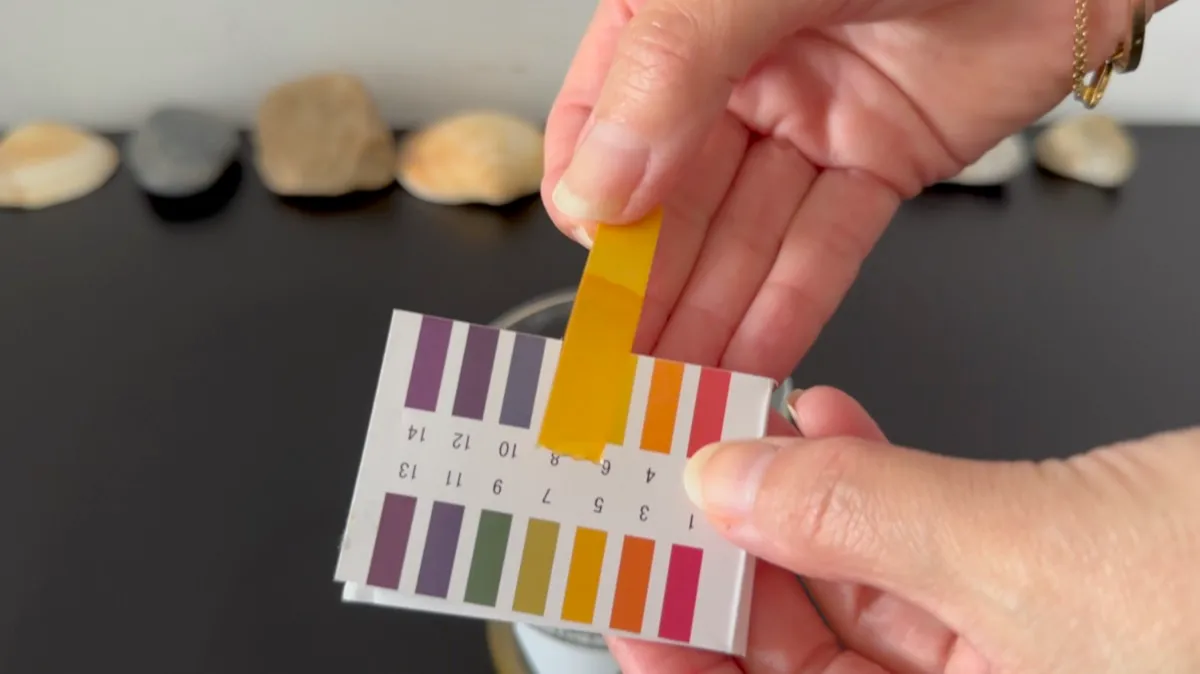
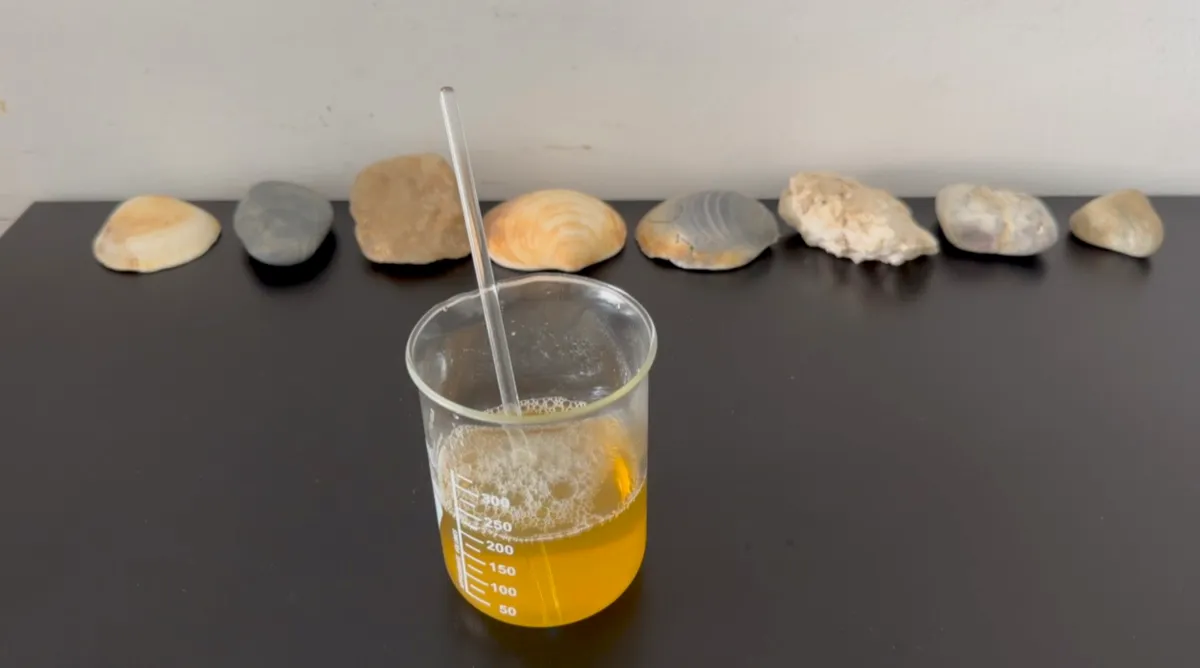
9. Let the formula rest for a few hours to release any trapped air and stabilize.
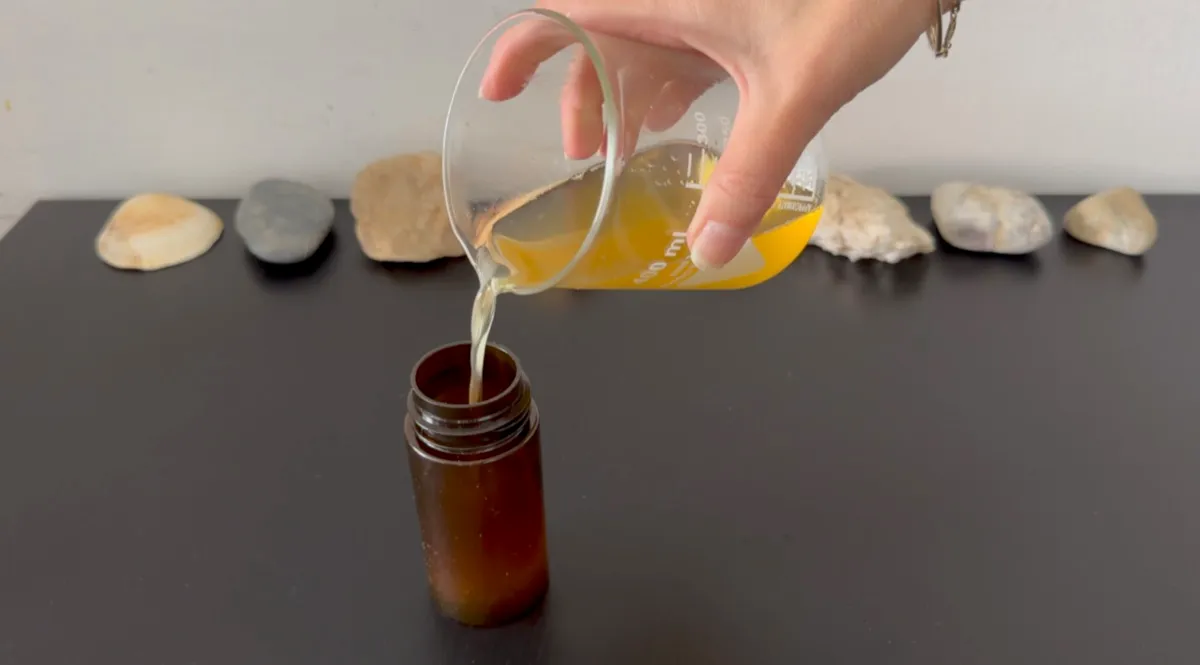
10. Transfer into a clean foaming pump bottle. The final product should be fluid — low viscosity is necessary for proper foam formation.
Shelf Life
Because this is a water-based cleanser, proper preservation and handling are essential for keeping it safe and stable. When made correctly with a suitable preservative and clean equipment, the expected shelf life is typically 3 months with the preservative used here.
Shelf life can vary depending on several factors, including the preservative system used, the cleanliness of your process, how the product is stored, and the quality and expiration date of the raw ingredients. Using fresh, properly stored ingredients will always give better stability.
Final Notes
This is a simple but well-balanced cleanser that shows how a few carefully chosen ingredients can work together to create something effective and pleasant to use. By combining gentle cleansing, light exfoliation, and hydration, you get a formula that improves skin texture over time without feeling too aggressive.
One key thing to understand with this type of product is that small changes can make a big difference. Changing the surfactant will affect how it foams and cleans, adjusting the acids will change how strong it feels on the skin, and even small variations in pH can impact both performance and comfort. For this reason it's always a good idea to work in small batches and observe how the formula behaves over time.
Also, remember that this cleanser is designed to be fluid and used in a foaming bottle. Trying to thicken it too much will change how it works and can prevent the pump from functioning properly.
If you decide to make it, take your time with each step — especially when dissolving the acids and adjusting the pH. These details are what make the difference between a formula that works and one that doesn't.
Make this cleanser, use it as a base to experiment with your own variations, and if you do, come share your version in the community forum.
— DIY Cosmetica