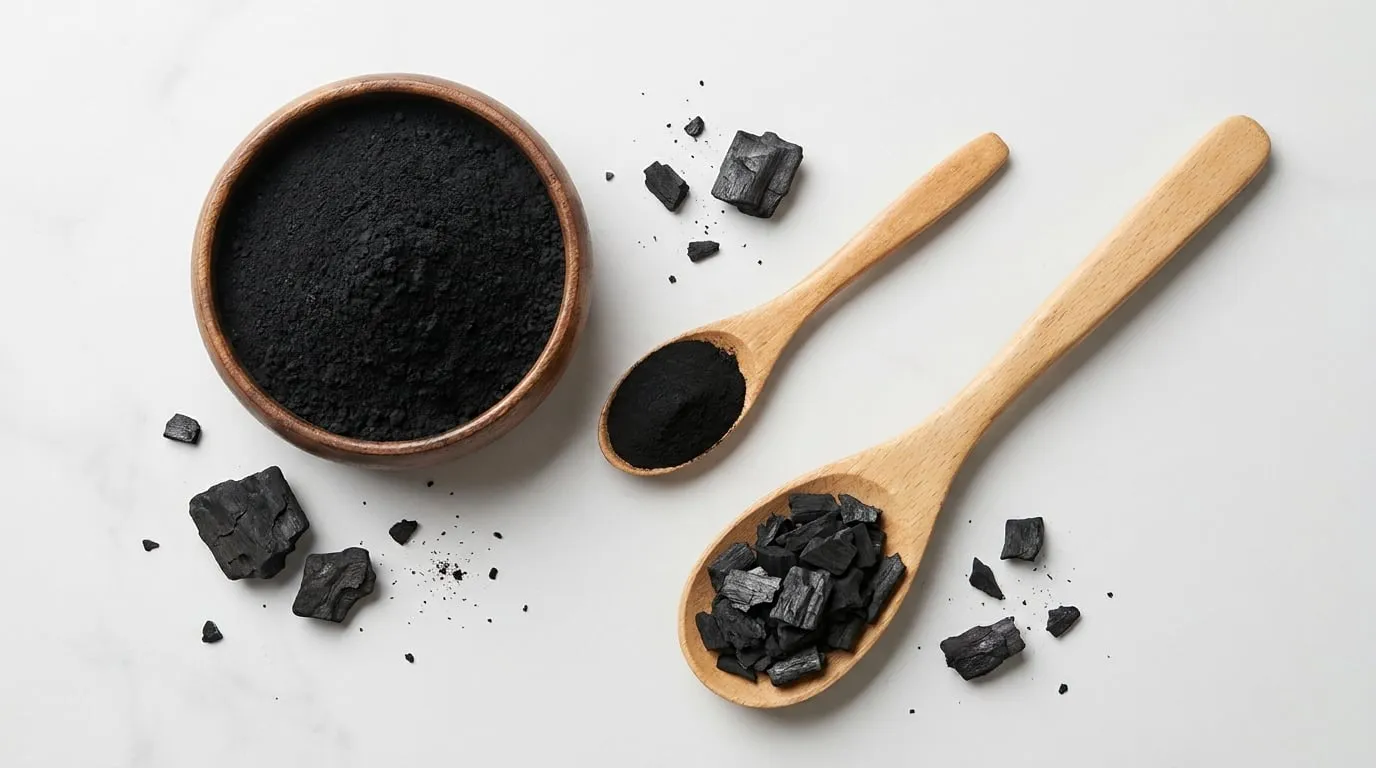
Activated charcoal is one of the most heavily marketed ingredients in modern skincare. Walk down the cleanser aisle and you'll see black masks, black bars, black scrubs, black toothpaste — all promising "deep detoxification," "blemish removal," and "perfect skin in one use."
The marketing is loud. The clinical evidence is quieter. In this post we'll walk through what activated charcoal actually does, where it earns a place in a formulation, and where the trendy claims fall apart. We'll also cover the safety issues that are rarely mentioned in beauty blogs.
Come join the forum, ask questions, learn from others, and share your own knowledge with the community.
You can support this website through the Buy Me a Coffee platform. Your donation helps me continue creating free formulas, detailed written posts, tutorials, and educational content for anyone who wants to learn how to make their own cosmetic products.
Running the website takes time and effort, from researching ingredients and testing formulas to writing posts, filming videos, editing content, and maintaining the site. Even a small donation helps support this work and allows me to keep sharing useful content for free.
If you find the website helpful and want to support future formulas and tutorials, you can donate through Buy Me a Coffee. Your support is truly appreciated.
What Is Activated Charcoal?
Activated charcoal is carbon that has been heat-treated and processed under controlled, low-oxygen conditions to create an enormous internal surface area. A single gram of cosmetic-grade activated charcoal can have a surface area of around 1,000 square metres, and experimental grades reach up to 3,500 m²/g (Sajjad et al., 2021).
The starting material can be wood pulp, coconut shells, peat, bamboo, lignite, or even olive pits. In the activation step, the raw carbon is treated with steam, oxygen, carbon dioxide, or acids, which removes impurities and opens up the microscopic pore structure that gives activated charcoal its famous adsorbent power.
Cosmetic-grade activated charcoal arrives as a fine, matte-black powder. Coconut shell is the most common source in DIY skincare because the pore structure is fine and consistent, and the colour stays a deep black without grey undertones. Bamboo charcoal and binchotan (a traditional Japanese hardwood charcoal made from ubame oak) are also used. The performance differences between these sources are small in finished cosmetic products — the surface area and the activation process matter far more than the starting plant.
A Very Short History
Charcoal has been used by humans for at least 5,700 years. There is evidence the ancient Egyptians used it as far back as 3,750 BCE, both for cooking and metalwork and to neutralise odours from bowel conditions. Greek and Roman civilisations used charcoal powder for dental hygiene, and by 400 BCE communities in the Indus region were using it to purify water (Sajjad et al., 2021).
The adsorbent properties were first described scientifically in the 1700s by the chemist Lowitz, who noticed that charcoal could decolourise other substances. A French pharmacist named Tourey publicly demonstrated the strength of charcoal as an antidote in 1830 by swallowing a lethal dose of strychnine alongside a generous amount of charcoal — and surviving. In 1834 an American physician named Hort used powdered charcoal to successfully treat a patient who had ingested mercury dichloride (Sajjad et al., 2021).
The skincare boom is much more recent. Charcoal moved into the cosmetic mainstream around 2014. By 2015 the International Nomenclature of Cosmetic Ingredients listed 148 skincare products containing charcoal powder. Four years later that number had grown more than fivefold (Sajjad et al., 2021).
How Activated Charcoal Works
The mechanism is adsorption — not absorption. The two words sound similar but mean different things. Absorption is when one substance soaks into another (a sponge absorbing water). Adsorption is when molecules stick to a surface (oil sticking to the surface of a porous material).
The microscopic pores in activated charcoal create an enormous surface area for things to stick to. When activated charcoal is on the skin during a mask or a cleanser, surface oil, dirt, and some non-polar organic compounds will stick to the carbon. When the mask is rinsed away, those substances rinse away with it.
"The toxins are adsorbed in non-ionized forms because of which it is very efficient at adsorbing non polar and hydrophobic organic toxins." — Sajjad et al., 2021
That is the real, evidence-supported mechanism of activated charcoal on skin: a physical surface attraction for oil and surface dirt during a rinse-off product. It's the same mechanism that allows activated charcoal water filters to remove chlorine and organic contaminants.
What the Science Actually Says
This is the part most beauty blogs skip. Activated charcoal is widely sold as a treatment for acne, blackheads, dark spots, fine lines, dandruff, and uneven skin tone. The clinical evidence behind any of these claims is very limited.
Sanchez, Fayne, and Burroway, writing in Clinics in Dermatology in 2020, performed a literature review and concluded:
"Although there have been no reported negative effects of charcoal on the skin, there have been equally few reports of its exfoliative or anti-aging abilities." — Sanchez et al., 2020
Sajjad and colleagues reached a similar conclusion in 2021. Activated charcoal as an antidote for ingested poisoning is well-established. As a topical treatment for specific skin conditions, the clinical evidence simply is not there yet. Most of the marketing claims rest on inference from charcoal's general adsorbent properties, not on controlled studies showing improvement of acne, pigmentation, or fine lines.
This does not mean charcoal does nothing. It does mean the honest version of the story is much narrower than the marketing suggests.
What Activated Charcoal Can Do
The genuine, evidence-supported benefits of activated charcoal in a topical cosmetic product are:
- Adsorb surface oil and dirt during a rinse-off mask or wash, leaving the skin feeling visibly cleaner immediately after use.
- Provide a small mechanical action when included in a paste or scrub-style mask — the fine carbon particles add a very gentle polish during application and removal.
- Carry the visual benefit — the dramatic black colour photographs beautifully and gives a product a clear visual identity. A plain clay mask becomes a "purifying detox mask" with a few percent of charcoal added.
- Function as a stain remover in tooth powders. Charcoal's mild abrasive effect can lift surface stains from enamel.
- Manage odour in wound care dressings. Activated charcoal dressings have been used clinically to reduce malodour from wounds (Sanchez et al., 2020).
These are real, useful properties. They support charcoal's use in cleansers, soaps, rinse-off masks, and tooth powders. They are not as exciting as the marketing — which is exactly the point.
What Activated Charcoal Cannot Do
Just as important is understanding the limits:
- It cannot "pull toxins" from healthy skin. The skin barrier is designed to keep substances out and keep moisture in. There are no free-floating toxins in the upper skin layers for charcoal to adsorb through that barrier.
- It cannot meaningfully shrink pores. Pore size is largely genetic. A rinse-off charcoal mask can briefly tighten the appearance of pores by removing surface oil, but the change is cosmetic and temporary.
- It cannot reliably treat acne, pigmentation, or fine lines — clinical evidence is missing.
- It does not "deep clean" inside pores. Charcoal sits on the surface; adsorption happens at the carbon surface, not down inside a follicle.
A formula that claims more than rinse-off cleansing benefit is overstating what activated charcoal can do.
Best Product Types for Charcoal
Activated charcoal genuinely earns its place in:
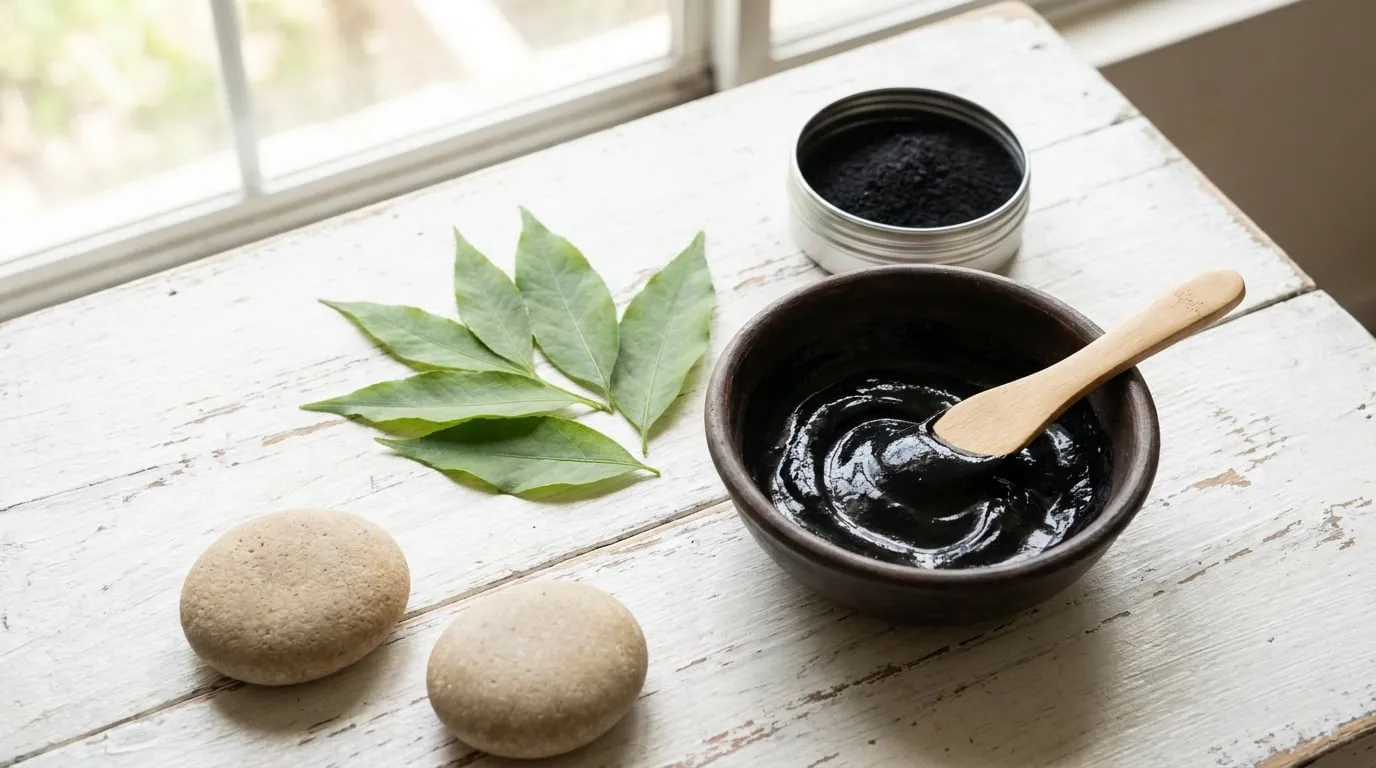
- Clay-based rinse-off face masks (2–5%): the combination of clay and charcoal is the sweet spot — clay adsorbs oil, charcoal adds visual impact and a small bonus adsorption, and the rinse-off format means the contact time is controlled.
- Cleansing bars and face washes (0.5–3%): visual identity + surface cleansing.
- Cold-process soap (1–3%): the black bar is iconic, and the trace amount of charcoal in the final bar still gives a mild deep-cleanse claim.
- Tooth powders (5–20%, cosmetic only): mild stain removal via abrasion.
- Eyeliner and brow base (2–10%): black pigment with good staying power.
Where activated charcoal does not earn its place:
- Leave-on creams and lotions. The dark colour transfers to skin, towels, pillows, and clothing — a daily-use leave-on charcoal product is more trouble than it's worth.
- Peel-off masks. The peel-off trend uses PVA glue or similar film-formers as the peeling mechanism, and the tearing action can damage the upper skin layers. Several reports have linked peel-off charcoal masks to scarring, infection, and persistent irritation (Sajjad et al., 2021). Make charcoal masks rinse-off, not peel-off.
- Charcoal mouthwashes. Studies have linked charcoal-based mouthwashes to enamel damage and resulting sensitivity (Sajjad et al., 2021). The same concern does not apply to occasional cosmetic-grade tooth powder use, but daily charcoal mouthwash is a poor idea.
Usage Rates by Product Type
A quick reference for formulators:
| Product type | Charcoal % | Notes |
|---|---|---|
| Rinse-off face mask (clay base) | 2–5% | Pre-disperse in glycerin |
| Face wash, foaming cleanser | 0.5–3% | Lower for visual only |
| Cold-process or melt-and-pour soap | 1–3% | Add at trace |
| Tooth powder (cosmetic) | 5–20% | Pre-mix with a clay or chalk base |
| Cleansing bar | 1–3% | Add at cool-down |
| Eyeliner / brow base | 2–10% | Pre-disperse in jojoba or squalane |
| Leave-on lotion or cream | Not recommended | Stains skin and surfaces |
How to Formulate With It
A few practical tips that apply to almost every charcoal formulation:
Pre-disperse the powder. Activated charcoal is dust-light and notoriously messy. Mix it into a small amount of glycerin, water, or your oil phase before adding to the rest of the formula. This stops it from clumping, floating, and getting all over your workspace.
Use opaque or dark packaging. Charcoal stains containers, droppers, and any white surfaces during pouring. Use brown glass, black PET, or aluminium packaging.
Source genuine activated charcoal. Plain charcoal (not heat-activated) has a fraction of the surface area and the adsorptive power. Look for "activated charcoal" or "activated carbon" of cosmetic or food grade.
Choose your source thoughtfully. Coconut shell is the most popular for cosmetics — it's fine, consistent, and the carbon is bright black. Bamboo is a renewable alternative. Hardwood and lignite-based grades exist but are more common in industrial filtration than in skincare.
Pre-warn the user. Charcoal stains hands, towels, sinks, and clothes during use. Include a quick instruction on the label or in the recipe ("rinse thoroughly," "avoid white linens").
Safety and Disadvantages
The honest version of the safety picture:
Topically, activated charcoal is generally safe when used in appropriate concentrations in well-formulated products (Sanchez et al., 2020). The most common complaints are dryness — charcoal is good at adsorbing oil, and over-frequent use of charcoal cleansers can leave normal or dry skin uncomfortably tight.
Peel-off masks are the highest-risk format. Multiple reports document skin scarring, infection, and persistent irritation linked to peel-off charcoal masks. The damage comes from the peeling action, not the charcoal itself. Stick to rinse-off formats.
Sensitive skin can react. Reports of allergic-type contact reactions exist, particularly with mass-market products that combine charcoal with synthetic fragrance, preservatives at high concentrations, or essential oils used above safe levels. For sensitive skin, do a patch test before applying any new charcoal product to the face.
Hypopigmentation and enlarged-pore concerns. Repeated, aggressive use of peel-off masks or other harsh charcoal products has been linked to permanent hypopigmentation, particularly in darker skin tones, and to enlarged pores at the site of repeated trauma (Sajjad et al., 2021). Once-a-week rinse-off masks do not carry this risk. Daily peel-off use does.
Tooth enamel damage from charcoal mouthwash. Brushing or rinsing with charcoal-based products has been linked to damage to the aprismatic and subsurface enamel, leading to tooth sensitivity and increased caries risk (Sajjad et al., 2021). Occasional cosmetic tooth-powder use is generally fine; daily charcoal mouthwash is not.
The Bottom Line
Activated charcoal is a genuinely useful adsorbent ingredient. It earns its place in rinse-off masks, face washes, cleansing bars, soaps, and cosmetic tooth powders, where its surface action and dramatic visual identity work together. As a leave-on treatment for acne, pigmentation, or fine lines, the clinical evidence does not yet support the marketing claims, and the staining alone makes daily leave-on use impractical.
The honest version of charcoal in skincare is:
- A real, surface-level adsorbent for oil and dirt during a wash-off product.
- A photogenic, brand-friendly ingredient that elevates the perceived sophistication of a mask or cleanser.
- A safe ingredient when used in moderate concentrations in well-designed rinse-off formats.
- Not a detoxifier, deep-cleanser, anti-acne active, or anti-aging treatment in any clinically-proven sense.
If you formulate around those realistic strengths, charcoal is a reliable and rewarding ingredient. If you market it as a cure for problem skin, the evidence is not on your side.
References
- Sajjad M, Sarwar R, Ali T, Khan L, Mahmood SU. Cosmetic uses of activated charcoal. International Journal of Community Medicine and Public Health. 2021;8(9):4572–4574. doi: 10.18203/2394-6040.ijcmph20213569
- Sanchez N, Fayne R, Burroway B. Charcoal: An ancient material with a new face. Clinics in Dermatology. 2020;38(2):262–264. doi: 10.1016/j.clindermatol.2019.07.025
— DIY Cosmetica